

Most of your technical content never gets shared on social media, in communities, or on forums such as Hacker News or Reddit.
Among thousands of pages on the Datadog blog, only about 500 have any incoming links, according to Ahrefs data. Most devtools websites, even the biggest ones, also have very few external shares for most of their technical articles and blog posts.
Zero shares means missed opportunities for an easy win that gives higher search rankings, broader AI search visibility, and social engagement.
There are several clear reasons why your team is not sharing your technical content and why you're missing out on more reach, happier colleagues, and more trust as a result.
The traditional content creation workflow
If you use the traditional content creation workflow, you likely start with an SEO roadmap or something similar, and then your content team (in-house, freelance, or agency) creates an article that gets published on your website.

After the piece is live, someone asks colleagues to share that piece on their social media. They may also ask the CEO to share it on their LinkedIn profile with a bit of thought leadership around the topic.
There is a problem here. Colleagues don't automatically share, even after being asked by the content team. Also, a share from the busy CEO is also not always guaranteed.
Many content teams get stuck here. It feels obvious that everyone on the team wants the company to get more traction for its content, but the willingness to share by the team often varies depending on the piece, as well as some other factors that are not always clear.
Why the sharing is not happening
In this traditional SEO-driven workflow, the content team doesn’t ask for input from elsewhere in the company as part of the content creation process.
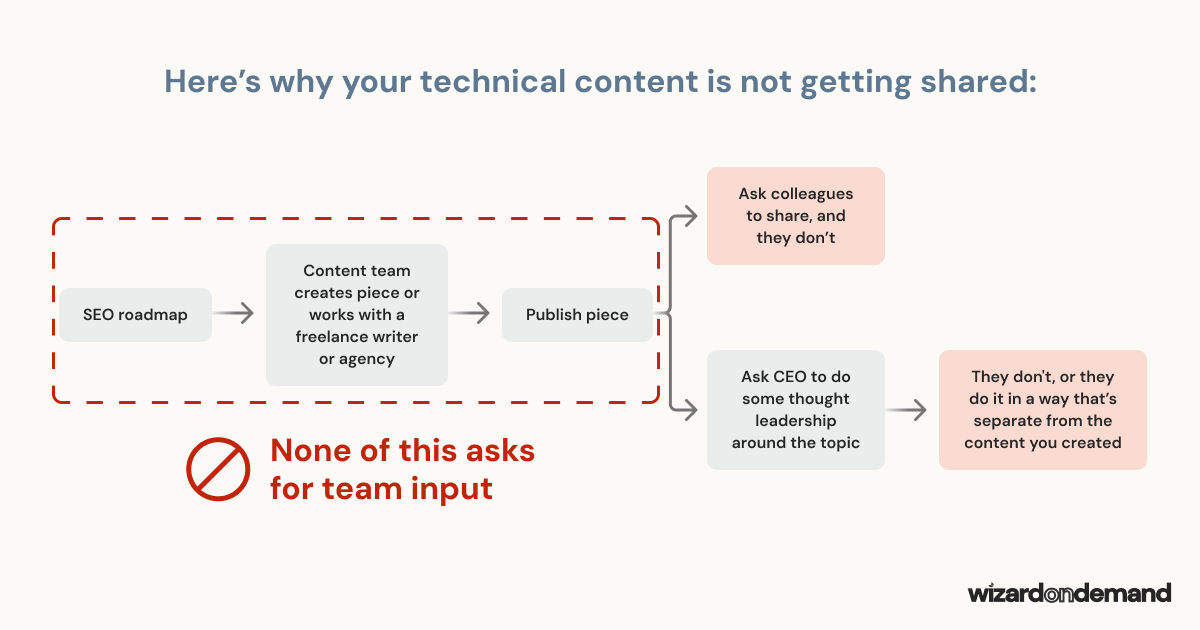
As a result, people in the company don't really know what the content is about until they see the finished piece you’re asking them to share. They likely have a slightly differing opinion on at least one or two things in the article. There is also a chance they have things they would have preferred to have said differently.
Because of this, sharing can feel misaligned or risky for them personally. It’s not reasonable to expect someone to share an article that they have a lack of conviction in.
The trivial fix: adding a review
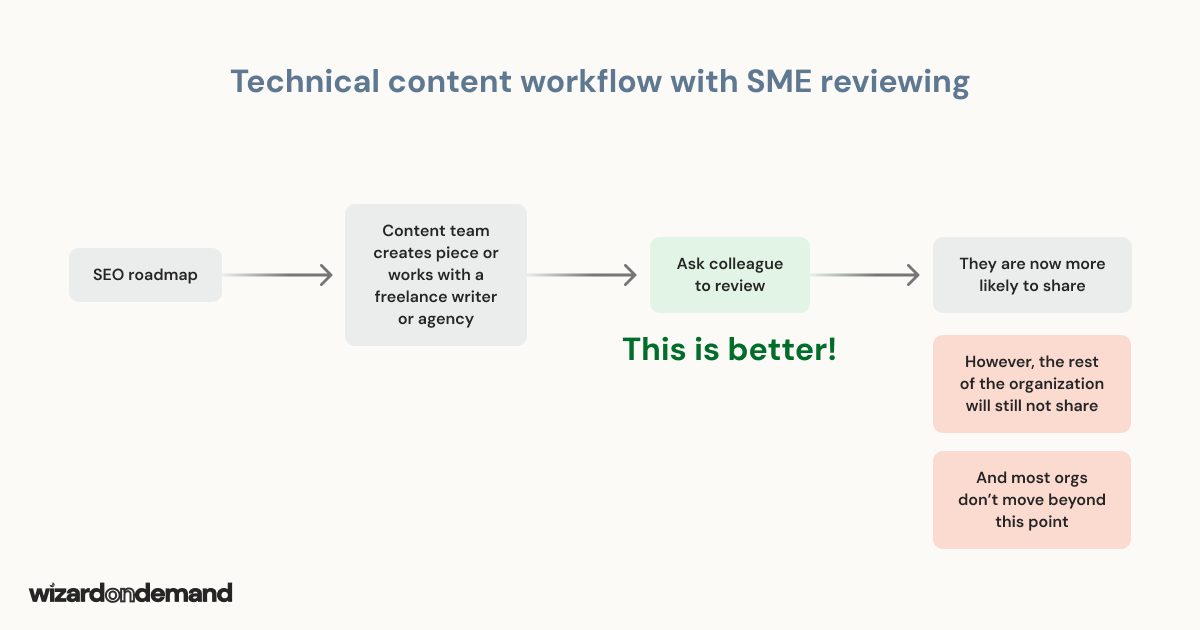
Usually, the attempted fix is to implement an extra review by a colleague, who then naturally shares the piece. This does improve the situation, but it’s very limited since just one extra person is sharing content. We haven’t really solved the issue of getting the team invested and getting company-wide sharing happening.
So what actually drives people to share content?
If we want to solve this properly, we need to look at the principles that motivate your team to participate in the sharing initiative.
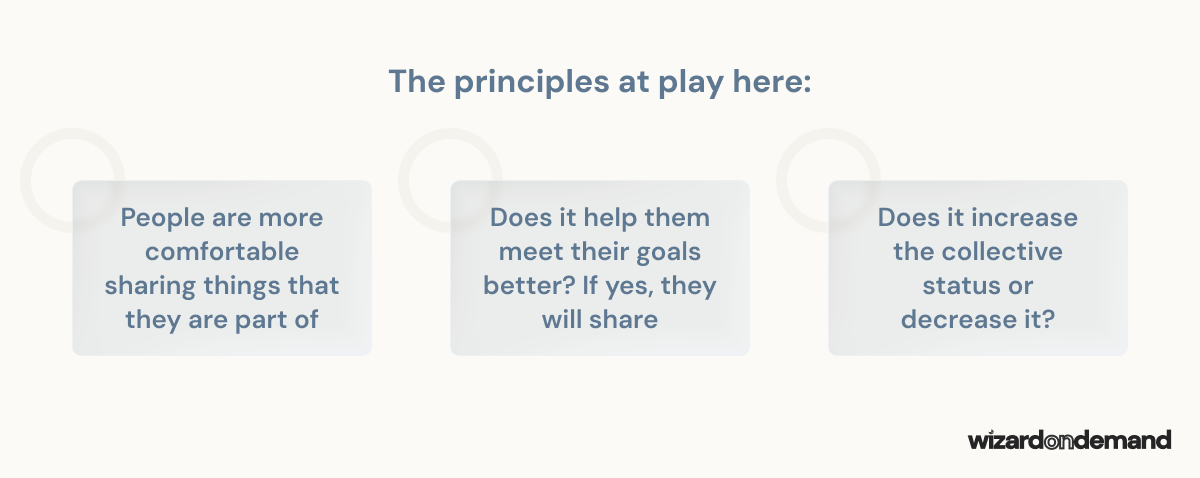
People share what they’re a part of
If you're asking a colleague to share something that they had no part in, they may do it once or twice, but you're slowly exhausting your social capital with them. If they have no clear connection to the article, you’re generally not going to be able to ask them to do it on an ongoing basis.
To gain their genuine investment, ask for input early so that they feel like a part of the process and that they’re fully involved in the creation of the content.
People share what helps them meet their goals
You need to align what you're doing with the goals of the people you are involving as individuals, not just team or company goals.
They’re more likely to share a piece that synchronizes with their role and would actually solve a problem for them. For example, a customer service-related article that accurately deals with a common issue is something that people in that department will automatically share among themselves, as well as users in certain cases.
People share what increases their collective status
Your colleagues will be reluctant to share something that they can see is objectively low quality.
You should create high-quality content that increases collective status. Produce content that elevates them and synchronizes with how they want to be perceived, and you will nudge up the chance of a share considerably.

How do I implement this in the content creation process?
Instead of driving everything just by the SEO roadmap (and the SEO roadmap is important, don't get me wrong), you need to switch the origination of the ideas.
You need the combination of an SEO roadmap, customer insights, sales team insights, and customer success team insights from customer conversations. You also need things like the CEO's understanding of the market and the priorities of different teams.

Bring the colleague in early
Instead of just asking the colleague to review at the end, you ask them ahead of time, when you're still at the planning phase.
This interview gets them the subject-matter expert’s view of the market, their opinion, and a range of thoughts that they have on this topic. This is a great opportunity to truly leverage the expertise of different experts from customer success through to engineers and sales engineers and publicly showcase the abilities of your team while educating your audience.
Outline, then approve
Then, the content team creates an outline consisting of bullet points, and shares it back to the SME to add comments and approve. The subject-matter expert approves the points, and they move onto the next part of the process.
Draft, then approve again
The next phase is the content team creating the draft based on this. Now, the content team no longer works from just a blank page or just the SEO roadmap. They're working from an outline that was specifically approved by the SME and includes all the different elements they originally wanted from all of these different planning phases.
And with that draft, they go back to the SME, who still has a look at it and makes sure that everything closely enough resembles the outline and the points they had originally.
Give the SME a byline
The SME has essentially given the conceptual structure and shape to the article, so it makes sense to give them a byline to credit their thinking.
Why this works
The SME is now fully invested and given credit for the article. The SME is now happy to share it because it's an article that they architected and directed. As this article is now attributed to a clear individual who is aligned to the subject matter, it gives confidence to other colleagues to share it, especially as they may recognise and value the SME’s ideas and direction.
How to take efficient action
The most simple change you can make today is to get input early from a subject-matter expert and use this process in a one-off test project. We recommend that you think about choosing your SME carefully. Who has time? Which SME would be more likely to enjoy this process? You want to remove as much friction as possible for your first trial and then iterate your process from there.
The overall principle here is true alignment between teams and team members. The priorities of the individuals that work at the company, as well as different teams and the CEO all need to run in sync.
If you're working on things that increase collective status and of high quality, your sharing initiative stands a significantly improved chance of success, which will improve the number of eyeballs on your content marketing and SEO campaigns.
This is a process that we run for technical software companies.
If you are curious to know more about how to engage and convert a technical audience using content, SEO, and paid media, send us a message here.